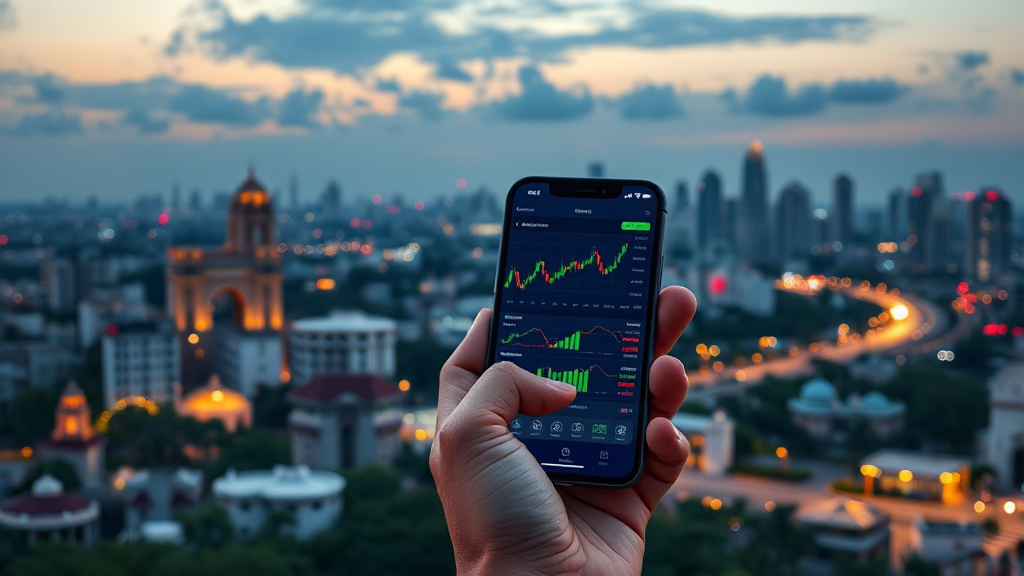
DABBA TRADING APP: A Fresh Perspective on India’s Evolving Trading Landscape
The Indian financial markets have always been a dynamic arena, adapting to the needs of traders who demand speed, efficiency, and reliability. In recent years, the rise of digital platforms has transformed how individuals participate in trading, and one name that has captured attention is the DABBA TRADING APP. This platform is designed to offer a secure and streamlined experience for those who engage in dabba trading, a practice that, while controversial, continues to attract a segment of traders seeking alternatives to traditional exchanges. In this article, we will explore the nuances of dabba trading, the role of technology in this space, and how this app aims to provide a modern solution.
Dabba trading, often referred to as bucket trading or box trading, operates outside the regulatory framework of established stock exchanges. It involves a broker or a platform that matches buy and sell orders internally, without routing them to the official market. This allows for faster execution and lower transaction costs, but it also carries significant risks due to the lack of regulatory oversight. The DABBA TRADING platform has emerged as a digital interface for this practice, promising a more organized and transparent approach than traditional manual dabba setups.
Understanding Dabba Trading: A Historical Context and Its Modern Relevance
To fully appreciate the significance of the Dabba Trading App, it is essential to understand the roots of dabba trading. Historically, dabba trading was conducted through informal networks, often in physical locations, where brokers would maintain a “dabba” (a box) to record trades. These trades were settled based on the prices of underlying securities, but they never appeared on official exchange records. This system offered traders the ability to trade with high leverage and minimal paperwork, but it also exposed them to counterparty risk and legal consequences.
In the digital age, this practice has evolved. Platforms like the Dabba Trading App bring this concept into the 21st century by leveraging technology to automate order matching, provide real-time price feeds, and maintain digital records. While the fundamental structure remains the same—trades are not executed on official exchanges—the user experience is vastly improved. The DABBA TRADING ID system, for instance, allows traders to create a unique identifier, enabling them to track their trades and settlements with greater accuracy.
Key Features of the Dabba Trading App: Speed, Security, and Insights
The Dabba Trading App distinguishes itself through several key features that cater to the needs of active traders. First and foremost is the promise of fast execution. In dabba trading, where speed is crucial, the app’s infrastructure is designed to minimize latency, ensuring that orders are filled almost instantaneously. This is particularly important for day traders who rely on quick entry and exit points.
Security is another critical aspect. Given the unregulated nature of dabba trading, trust is a major concern. The app employs encryption and secure authentication protocols to protect user data and funds. While this does not eliminate the inherent risks of dabba trading, it provides a layer of protection that was previously unavailable in manual setups.
Real-time insights are a third pillar. The app offers live charts, price alerts, and analytical tools that help traders make informed decisions. These features are similar to those found on regulated trading platforms, but they are tailored to the specific mechanics of dabba trading, such as tracking settlement prices and managing leveraged positions.
The Role of MCX Dabba Trading in Commodities Markets
One specialized segment of dabba trading is MCX DABBA TRADING, which focuses on commodity derivatives, particularly those listed on the Multi Commodity Exchange (MCX) in India. This includes metals like gold and silver, energy products like crude oil, and agricultural commodities. MCX dabba trading allows participants to speculate on price movements without the need for a formal broker or exchange membership. The Dabba Trading App supports this segment by providing commodity-specific price feeds and contract details, enabling traders to engage in this high-stakes arena with relative ease.
For traders who are accustomed to the volatility of commodities, MCX dabba trading offers opportunities for significant gains, but also exposes them to substantial losses. The app’s real-time data and risk management tools are designed to help users navigate these waters, though the ultimate responsibility lies with the trader. It is crucial for anyone considering MCX dabba trading to understand the risks and to approach it with caution.
Navigating the Dabba Trading Site: User Experience and Accessibility
The DABBA TRADING SITE is the digital gateway to this platform. From a user experience perspective, the site is designed to be intuitive and accessible, even for those who are new to dabba trading. The registration process is straightforward, requiring basic personal information and the creation of a trading ID. Once registered, users can deposit funds, view live market data, and place trades through a clean and responsive interface.
Accessibility is further enhanced by the availability of the app on multiple devices, including smartphones and tablets. This allows traders to monitor their positions and execute trades on the go, a feature that is essential for those who cannot be tethered to a desktop. The site also includes a help center and customer support, which are valuable resources for resolving issues and answering queries.
Risk Management and Ethical Considerations in Dabba Trading
While the Dabba Trading App offers a modernized platform, it is imperative to address the risks and ethical implications of dabba trading. Since these trades are not routed through official exchanges, they are not subject to the same regulatory protections. This means that in the event of a broker default or a dispute, traders may have little recourse. Additionally, dabba trading often involves higher leverage, which can amplify losses.
From an ethical standpoint, dabba trading operates in a legal gray area in India. While it is not explicitly illegal, it is frowned upon by regulators like the Securities and Exchange Board of India (SEBI) because it bypasses market oversight. Traders who engage in dabba trading should be fully aware of these risks and should only invest funds that they can afford to lose. The Dabba Trading App, for its part, includes disclaimers and risk warnings, but the onus is on the user to exercise prudence.
Future Outlook: The Evolution of Dabba Trading Platforms
As technology continues to advance, the landscape of dabba trading is likely to evolve further. We may see the integration of blockchain technology to enhance transparency and security, or the adoption of artificial intelligence to provide more sophisticated trading signals. The Dabba Trading App is positioned to be at the forefront of these changes, given its focus on innovation and user experience.
However, the future also hinges on regulatory developments. If Indian regulators decide to legitimize or crack down on dabba trading, platforms like this will need to adapt accordingly. For now, the app serves as a testament to the resilience of a practice that has persisted despite regulatory challenges, adapting to the digital age while retaining its core appeal of speed and flexibility.
Frequently Asked Questions (FAQ)
Is dabba trading legal in India?
Dabba trading is not recognized by Indian regulatory authorities like SEBI. It operates outside the official exchange framework, which means it is not illegal per se, but it is unregulated and carries higher risks. Traders should be aware of the legal ambiguity and potential consequences.
How does the Dabba Trading App ensure the security of funds?
The app uses encryption and secure authentication to protect user data and transactions. However, since dabba trading is not regulated, there is no formal investor protection. Users should exercise caution and only trade with funds they can afford to lose.
What is an MCX dabba trading ID and how is it used?
An MCX dabba trading ID is a unique identifier created on the Dabba Trading App that allows users to trade commodity derivatives, such as gold and crude oil, outside the official MCX exchange. This ID is used to track trades, settlements, and balances within the platform.
Can I use the Dabba Trading App on my mobile phone?
Yes, the Dabba Trading App is designed to be accessible on various devices, including smartphones and tablets. This allows traders to monitor markets and execute trades from anywhere with an internet connection.
What are the main risks of dabba trading?
The primary risks include counterparty default, high leverage leading to amplified losses, and lack of regulatory protection. Additionally, since trades are not reported to official exchanges, there is a risk of price manipulation and settlement issues.
In conclusion, the DABBA TRADING APP represents a modern take on a traditional, yet controversial, trading practice. It offers speed, convenience, and a suite of tools that appeal to a certain class of traders. However, it is not without its risks, and anyone considering dabba trading should approach it with a full understanding of the potential downsides. As the financial landscape continues to evolve, platforms like this will likely remain a part of the conversation, reflecting the diverse and sometimes unorthodox ways in which people engage with the markets.